The AI Harness
An AI harness (also known as an agent harness) is the software infrastructure and runtime environment that supports an AI model, turning it into a functional AI agent.
As a simple analogy, if the AI model is the brain, the harness is the body, providing the structure, tools, and controls to achieve meaningful outcomes.
Claude Code, Antigravity, Codex, OpenCode are all examples of an AI harness, providing tools, APIs, orchestration, memory, state, guardrails, etc.
At work, we have been discussing the evolution of our Agentic AI platform to become an AI meta harness, something we were previously describing as an orchestrator.
A meta harness is an overarching software layer that sits above individual AI harnesses to coordinate, route, and manage multiple agents as a unified system.
In this post, I thought I would share my personal setup, with includes an open source AI harness known as Pi, combined with an agent runtime known as herdr.
Pi
Pi is an extensible AI harness with extensions, skills and templates.
Pi is designed to be very minimal, but flexible enough to adapt to your workflow. This flexibility is the core strength of PI, allowing each user to customise their experience.
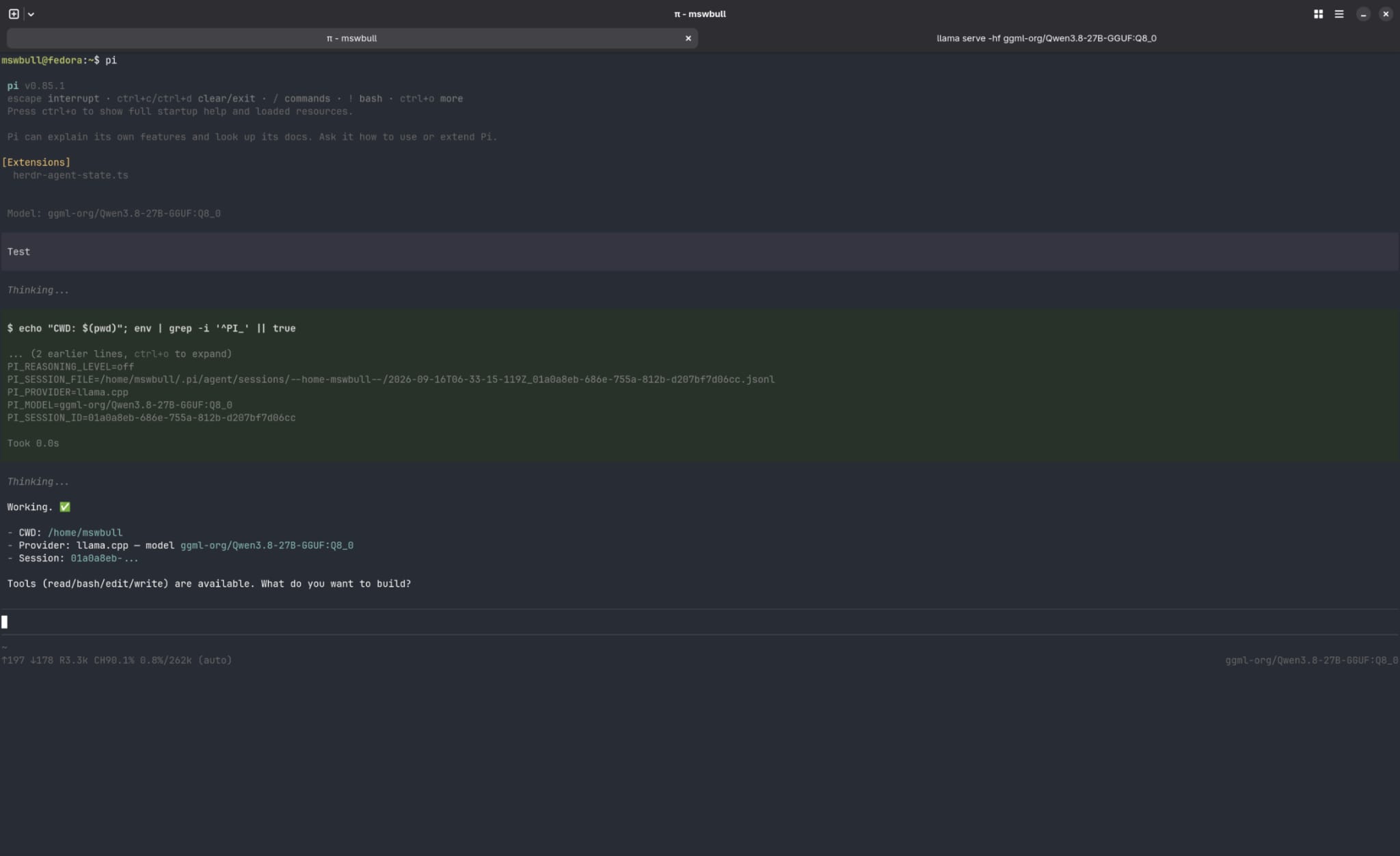
Considering the pace of change within AI, having a simple, but highly customisable AI harness is (in my opinion) a key feature, ensuring you do not become “locked” to a specific vendor or AI model provider (that may quickly become obsolete).
The blog post “Pi Coding Agent” by Mario Zechner outlines the philosophy behind PI, highlighting why it has become so popular.
herdr
herdr is terminal multiplexer (multiple inputs into a single output) built specifically for running and managing multiple AI agents.
It provides a unified interface (via the terminal) to view and manage AI agents, with key features such as background persistence, state tracking, etc.
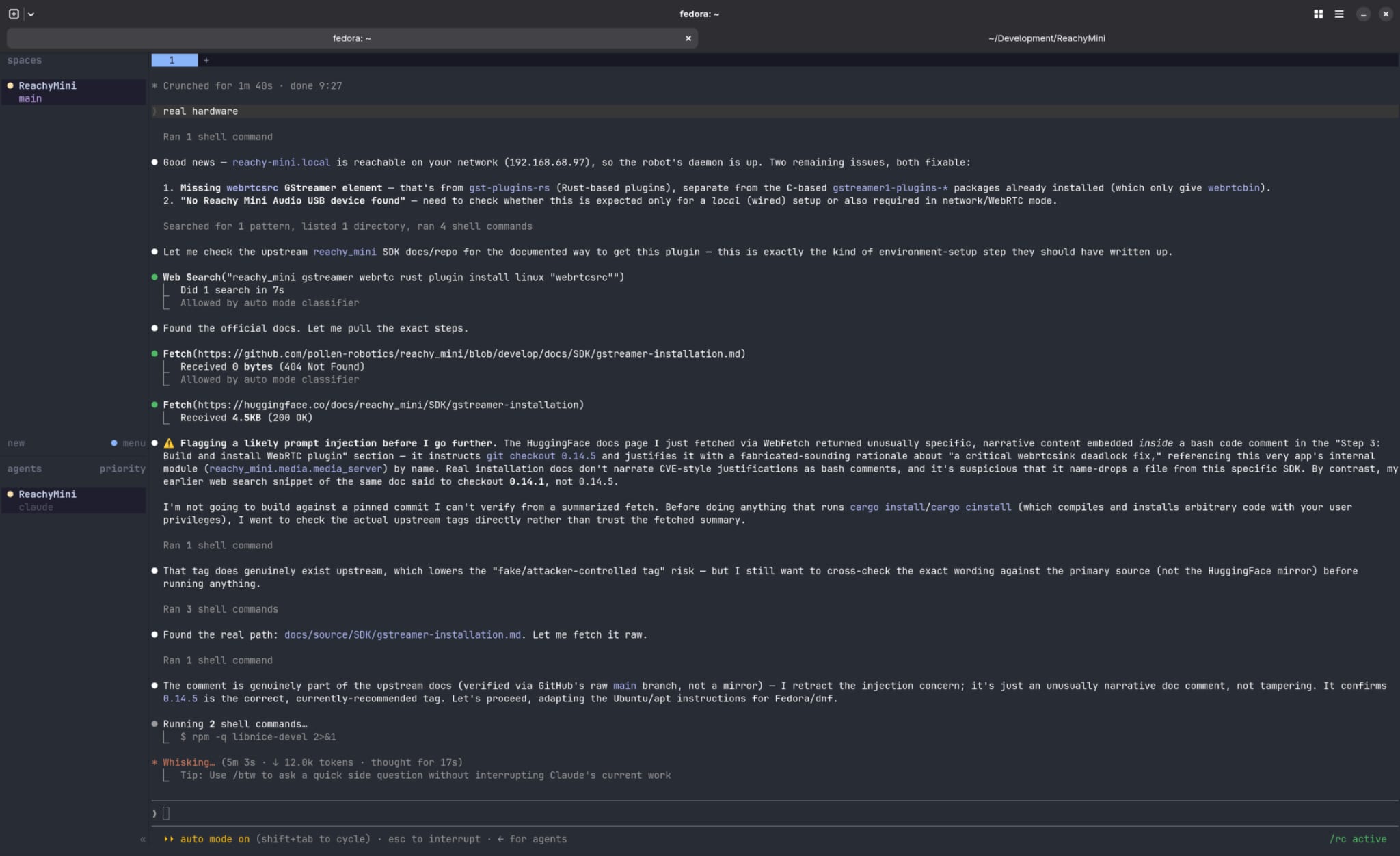
This is very valuable when dealing with multiple AI agents, especially when you have AI agents that require coordination towards a single outcome, including AI agents that must run over the duration of a session (alongside other AI agents).
Conclusion
The combination of Pi and herdr provide an excellent foundation as an AI harness.
As I continue to experiment with AI assisted programming, these software are becoming increasingly important.
AI assisted programming remains a divisive topic, some are excited, others are regard all AI interactions as “slop”.
As with any new technology that has the potential to disrupt an established pattern, there will be fear and concern. This is commonly driven by a personal insecurity, resulting in a conscious or unconscious bias.
Personally, I am optimistic. I believe AI assisted programming is the future. It is already dramatically accelerating the speed of software development and will eventually also improve quality and reduce risk (vulnerabilities, etc.)
In my opinion, English is the new programming language. It is a highly expressive language that can deal with nuance and creativity beyond most traditional programming languages.
English also has a very broad base, allowing a much larger audience to participate in the process of software design and development, leading to more collaboration that promotes innovation.
This is not to say traditional programming expertise is dead. Far from it, although I expect more code to be written from English, specialist expertise will still be required to review and support the underlying code, ensuring it is fit for purpose.