Games Industry
I have a new favourite handheld game console, and surprisingly, it is not made by Sony, Microsoft, or Nintendo. Introducing the Retroid Pocket Nova, which in a world dominated by constant price increases, might be the best-value handheld game console currently on the market.
I purchased the 12+128GB version in black directly from Retroid for £226.41.
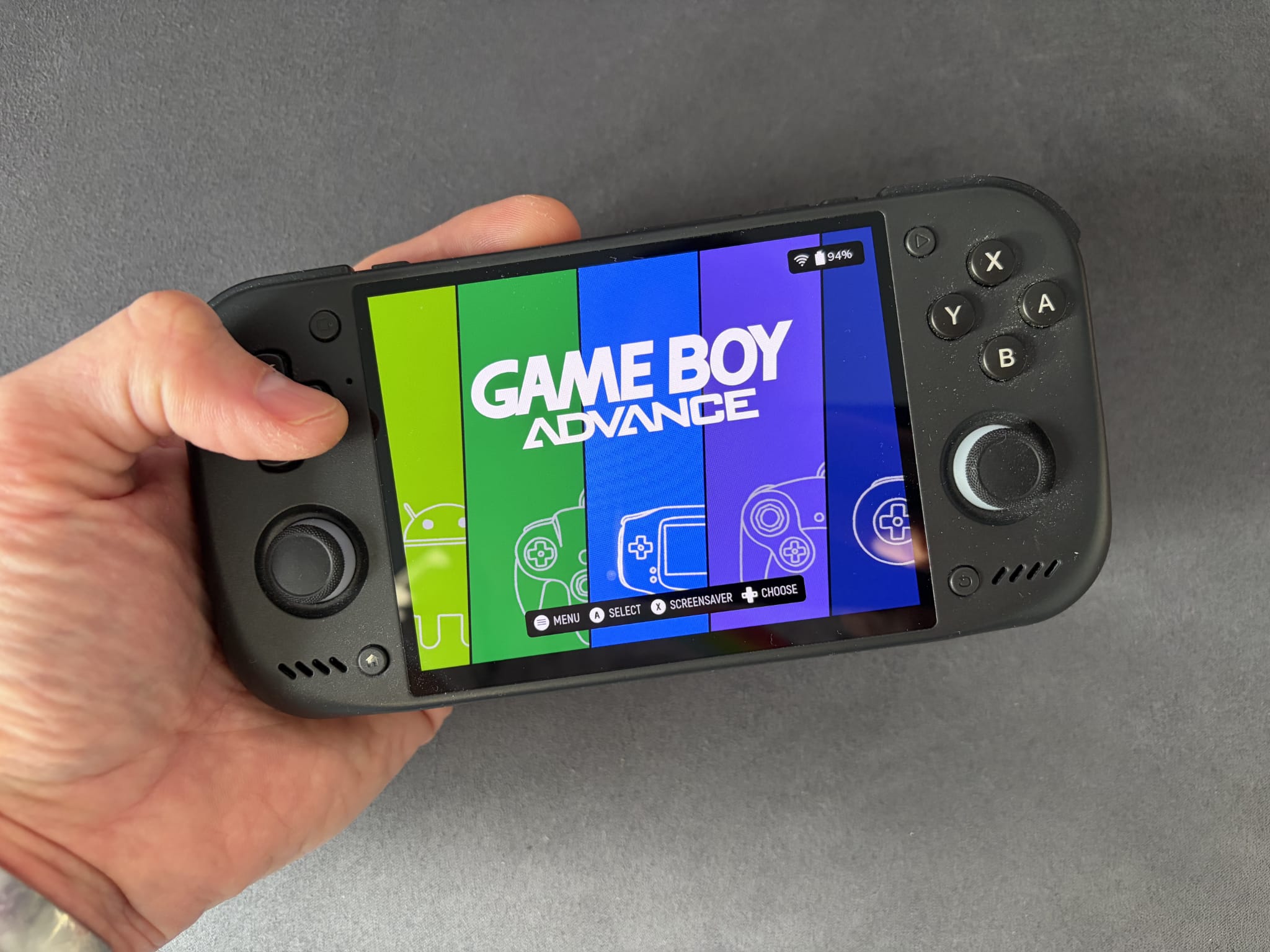
The full specification can be found below:
- Qualcomm Dragonwing QCS8550 (8C, Prime CPU = 3.2GHz)
- Qualcomm Adreno 740 (680MHz)
- 12GB LPDDR5x (8533 MT/s)
- 128GB UFS 3.1 (2100 MB/s)
- Micro SD Card Slot
- 4.5-inch Touch AMOLED (4:3, 1280×960@120Hz)
- Wi-Fi 7, Bluetooth 5.3
As a fan of “retro” gaming, this is the ultimate handheld game console. The specification and build quality are both fantastic, specifically the excellent controls and 4:3 AMOLED display with a 120Hz refresh rate.
The Retroid Pocket Nova can emulate any game console up to the Sony PlayStation 2, including the Nintendo GameCube and Sega Dreamcast. When you consider the game library available, it includes some of the best games ever made—for example, The Legend of Zelda: Ocarina of Time (N64), SoulCalibur (Dreamcast), Metroid Prime (GameCube), GoldenEye 007 (N64), and Metal Gear Solid 3: Snake Eater (PS2).
The Retroid Pocket Nova (even the 8GB version) will run all these games at high framerates, including the ability to upscale the resolution and apply filters.
The console runs Google Android, which makes it highly versatile. However, I chose to run a custom frontend, specifically EmulationStation Desktop Edition (ES-DE). This provides a very polished and highly customizable user experience to manage and play all games.
The only downside to the Retroid Pocket Nova is the initial setup, which requires some effort (maybe an hour total time). Thankfully, Retro Game Corps provides an excellent guide, which in my experience worked perfectly.
The fact that the Retroid Pocket Nova can be purchased for around £200 (8GB version) is an incredible deal, which in my opinion easily makes it the “best” price-to-performance handheld game console currently available.
It is fair to state that the games industry is currently suffering, with game development costs skyrocketing, hardware prices at an all-time high, and game studios being closed or consolidated. Even major console players (specifically Sony and Microsoft) are facing unprecedented challenges, forcing them to make extremely unpopular decisions.
Arguably, only Nintendo has managed to retain some semblance of sanity during this period, helped by the fact that they are less reliant on high-performance hardware (impacted by the RAMpocalypse) and the tight control they maintain regarding their game studios.
In my opinion, Sony and Microsoft have difficult times ahead, and they will need to make some tough decisions. Outlined below are some of my thoughts as to how they can persevere through this difficult period.
Sony
-
Delay the launch of a next-generation console. Look for opportunities to maximise the value of the current PlayStation 5 and PlayStation 5 Pro.
-
Consider the launch of a dedicated handheld game console (lower RAMpocalypse impact), providing the market with new hardware and acting as a stopgap between full console generations.
-
Provide an option to retain physical media for future generations, either via an external reader or a “physical to digital” program. This demonstrates a commitment to game preservation and loyalty to existing customers with a large physical media library.
Microsoft
-
Consolidate game studios, reducing significant operational overhead and protecting the core business to ensure longevity.
-
Establish a roadmap for game releases that promotes diversity and different pricing tiers (Triple-A, Double-A, Independent, etc.). Sequence the roadmap to ensure a constant flow of new experiences for gamers.
-
Delay the launch of a next-generation console. Consider releasing a “refined” Xbox Series X (new shape) replacing the existing Xbox Series X and S to simplify manufacturing and supply. Increase the value proposition by allowing users to install alternative operating systems (specifically Windows and SteamOS), essentially making the Xbox a Steam Machine competitor at a lower price point.
-
Consider the launch of a dedicated handheld game console (lower RAMpocalypse impact), providing the market with new hardware and acting as a stopgap between full console generations.
-
Return to exclusives, specifically timed exclusives. For example, all new games release for Xbox first before being added to other platforms (e.g., Sony PlayStation, Nintendo Switch, etc.).
-
Simplify Game Pass, removing features that are not utilised. All new Xbox game exclusives are initially sold separately (e.g., Call of Duty), only being added to Game Pass once they have saturated the market for independent sales.
I am not suggesting these actions will be easy or even successful. However, they are some of the things I would be considering if I worked at Sony or Microsoft.
In the interim, I recommend people look towards Nintendo and alternative game console manufacturers (like Retroid) for their gaming fix.