Reachy Mini
Earlier this week, my daughter (8) and I completed a little project to build a Reachy Mini from Pollen Robotics.
Reachy Mini is an expressive companion robot designed for human interaction, creative coding, and AI experimentation.
The build process took around two hours, spread over several days. The included instructions were very clear, and the components were logically organised. There were a few fiddly parts (like cable routing), but otherwise, my daughter was completely capable of following the steps.
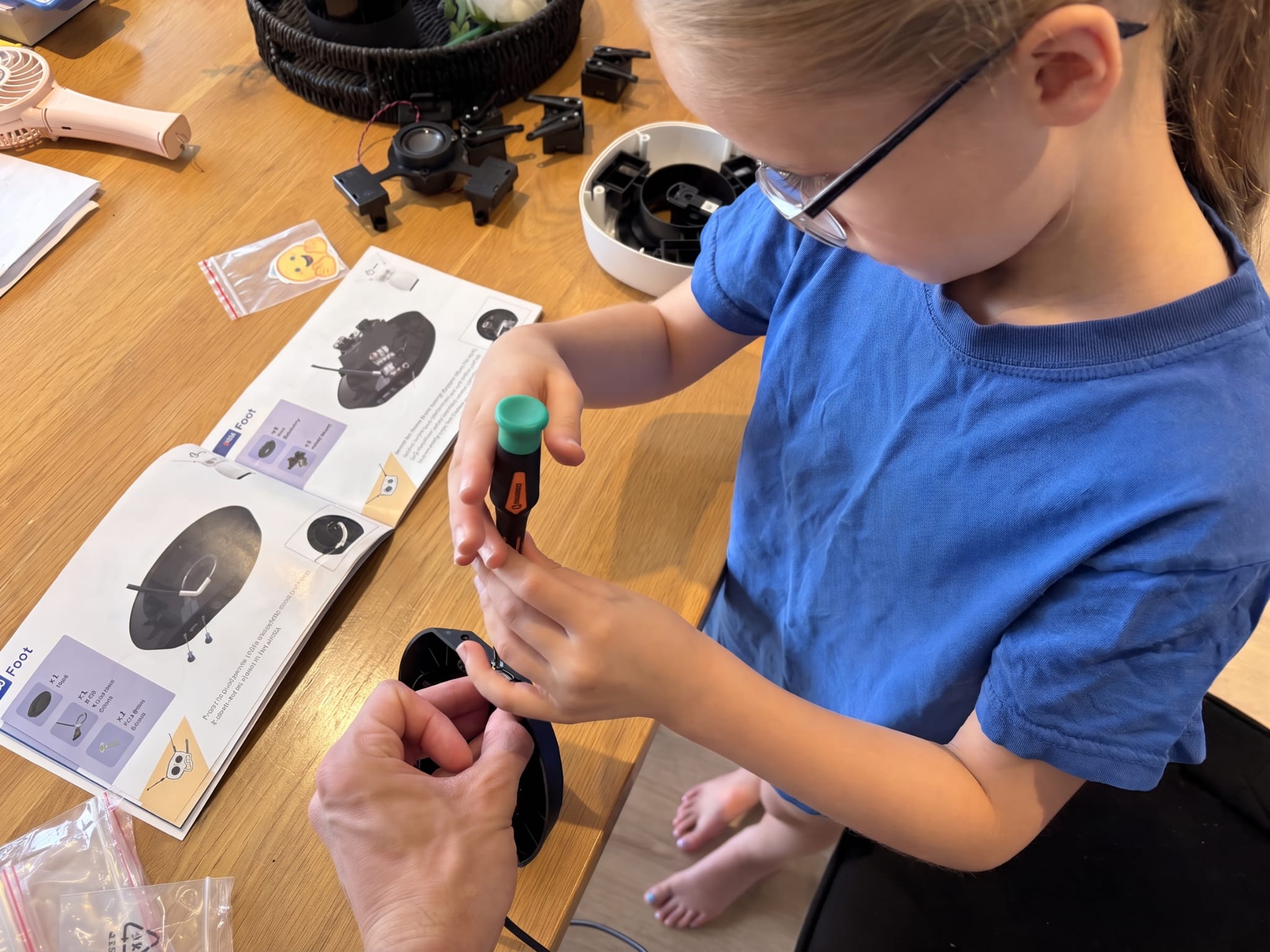
With any build of this type, I rarely expect it to work the first time. Usually, something needs adjustment, but in this case, I am pleased to report that the Reachy Mini fired up on the first try.
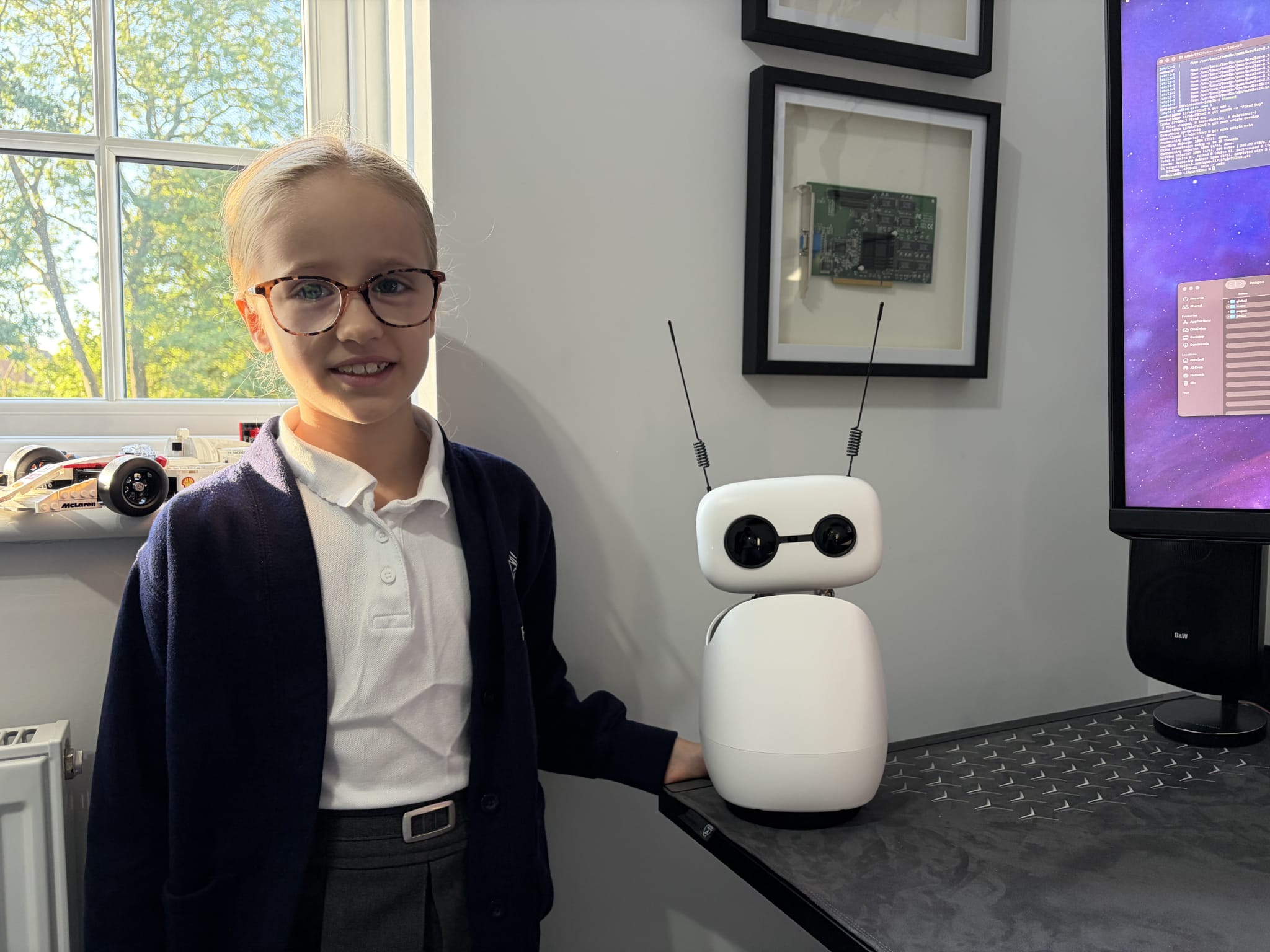
It should be noted that there are two versions of the Reachy Mini (Wireless and Lite). We have the wireless version, which has a Raspberry Pi CM4 built-in and runs standalone, without a computer.
However, this means the Reachy Mini must be joined to a wireless network to control it remotely (you can’t use the USB without an Ethernet adapter).
Once connected, the Reachy Mini can be remotely accessed via the Reachy Mini Control application, which should autodetect the connection. Within the application, you can remote-control the Reachy Mini directly (great for testing the build). However, more importantly, you can browse, install, configure, and run applications.
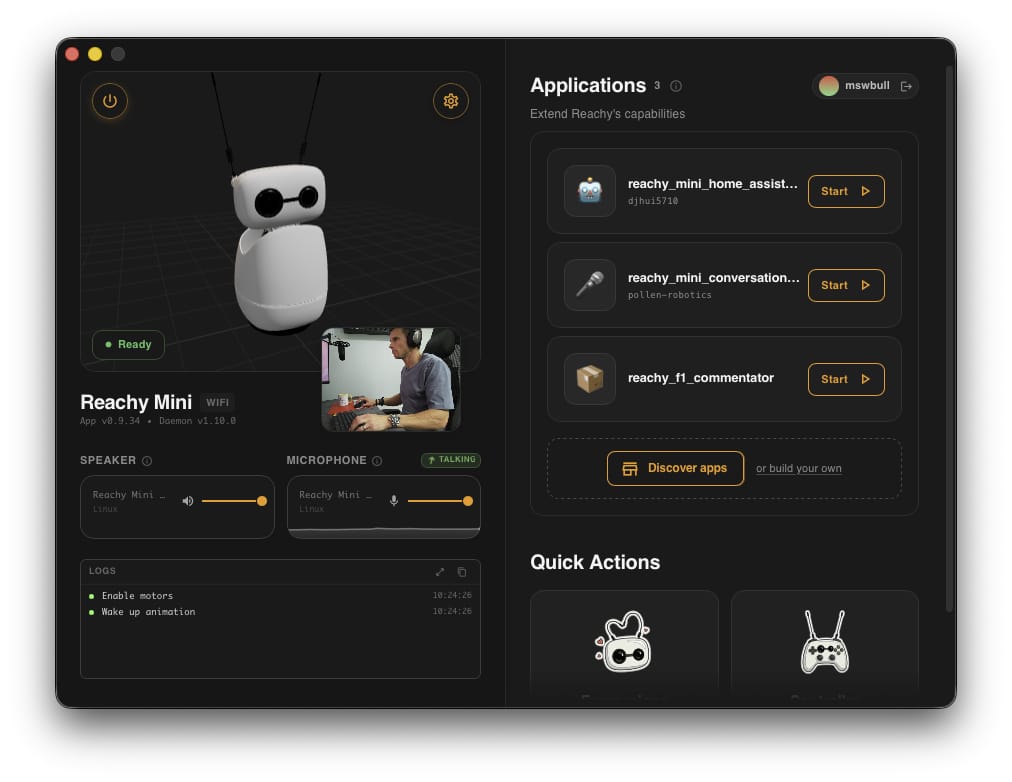
All applications are available from Hugging Face. You can also build your own using the SDK.
The most notable application is the “Conversation App”. This application allows you to have natural language conversations with the Reachy Mini, incorporating voice, vision, and physical movement for expressions.
You can even create custom personalities, including specific instructions and context, which makes the Reachy Mini feel unique and personal to your circumstances. For example, my daughter and I made a personality that was fun and engaging for kids (prompt below):
You primarily interact with children. You are a fun friend with a positive attitude. You can be a little silly with the children. You can play, educate, and inspire.
We also provided some generic context regarding our family, allowing the Reachy Mini to better understand the surrounding environment.
Overall, Pollen Robotics has done a great job with Reachy Mini. It is fast and easy to get started, with a focus on making STEM engaging. My daughter now wants to “build robots” when she grows up—it will be interesting to see if she finds the software side of the process just as fun.
Over the coming weeks, I am eager to dive into the SDK.