Artefacts and Skills
In the previous two articles, Agentic AI in Action and Agentic AI Builder, I outlined the latest release of our Agentic AI framework for business.
As a reminder, following the launch of ChatGPT, my team began work on a multi-model, multi-modal Generative AI framework for business, which has evolved to include Agentic AI capabilities.
The article Agentic AI Builder includes a full history of posts, tracking the development process.
Earlier today, taking inspiration from Anthropic, the team took another important step forward, officially releasing two new capabilities, specifically Artefacts and Skills.
Artefacts
An artefact is an evolution of the previously released “Builder” capability, allowing a user to create a self-contained application, generated from a single prompt or as part of an Agentic AI workflow.
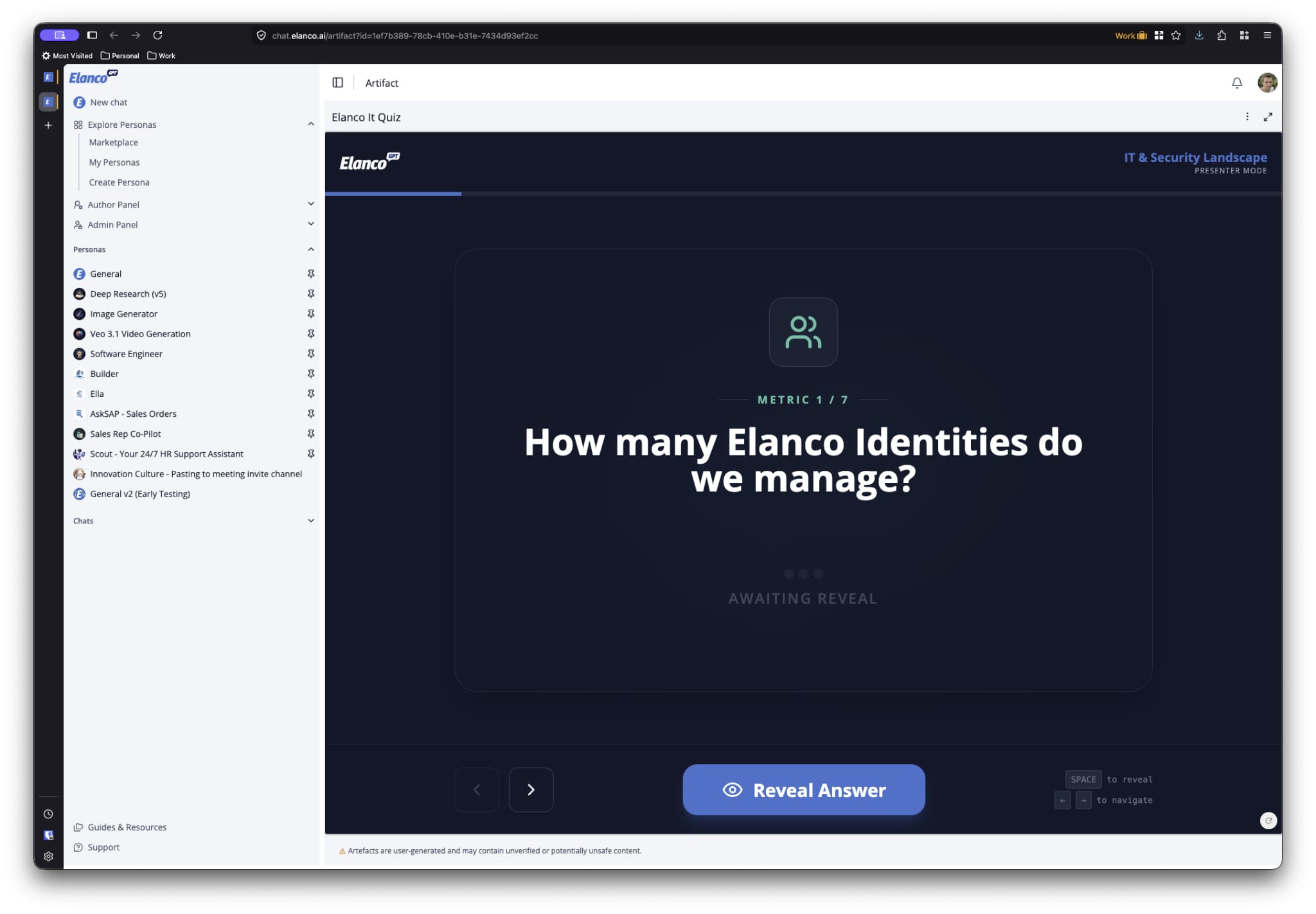
The difference being that these self-contained applications can be an embedded as part of any AI interaction, producing a “rich” user experience that features interactive elements and application functionality (process flows, etc.) For example, the screenshot below highlighted an interactive quiz I created to support a meeting.
In addition, interactive elements, regardless as to how they were created, can be securely shared and managed independently of a specific chat. Therefore, it is possible to create, share and iterate upon an artefact, grouped with the associated context and data.
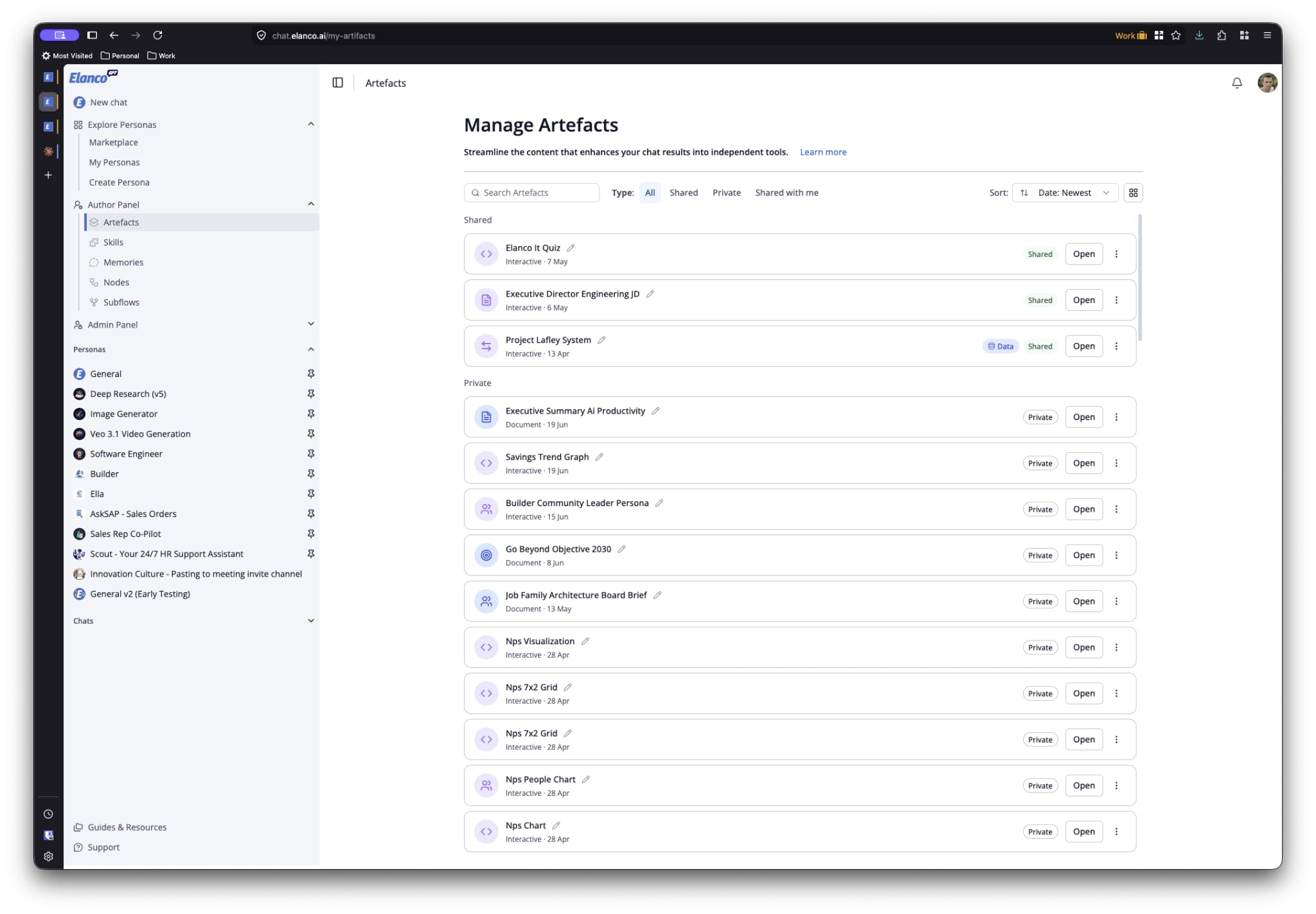
All context and data associated with an artefact is secured and controlled, with specific protections to proactively protect security, compliance and privacy, based on corporate policies and standards.
When combined with deep research, image generation, personas and workflows, artefacts have the potential to change the way we produce, analyse and share data, alongside the ability for any user to create self-contained applications that support specific business processes.
Skills
Skills are specific capabilities that can be dynamically added to any AI interaction to improve performance on specialised tasks.
The team has developed a library of skills that can be commonly applied. However, it is also possible for a user to create and manage their own skills.
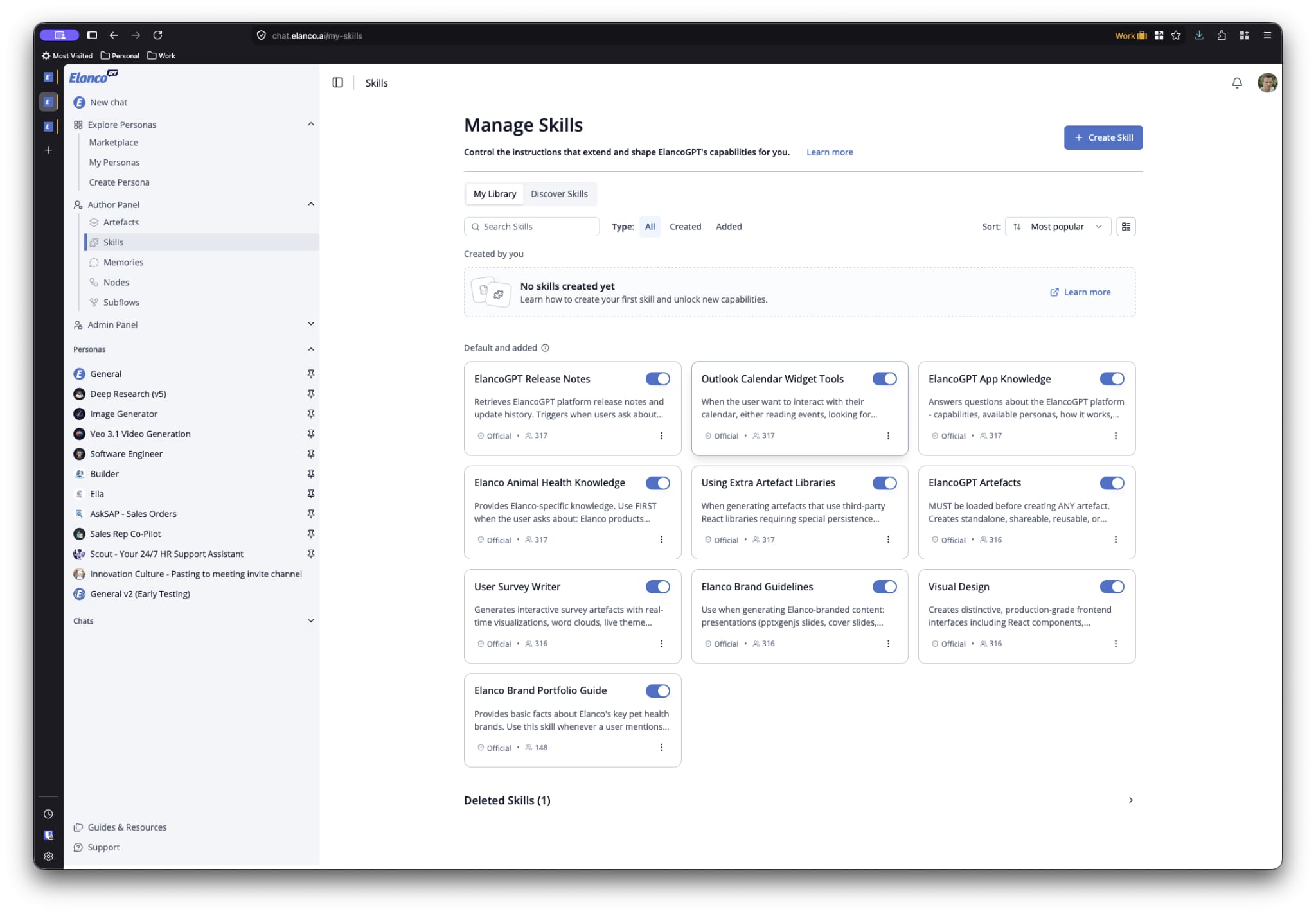
A great example is the Outlook Calendar Widget Tools, which provides secure and private access to the users email and calendaring data, including the ability to review and interact with the information. For example, as outlined in the screenshot below, reviewing calendar entries and automatically generating documentation to support meetings, etc.
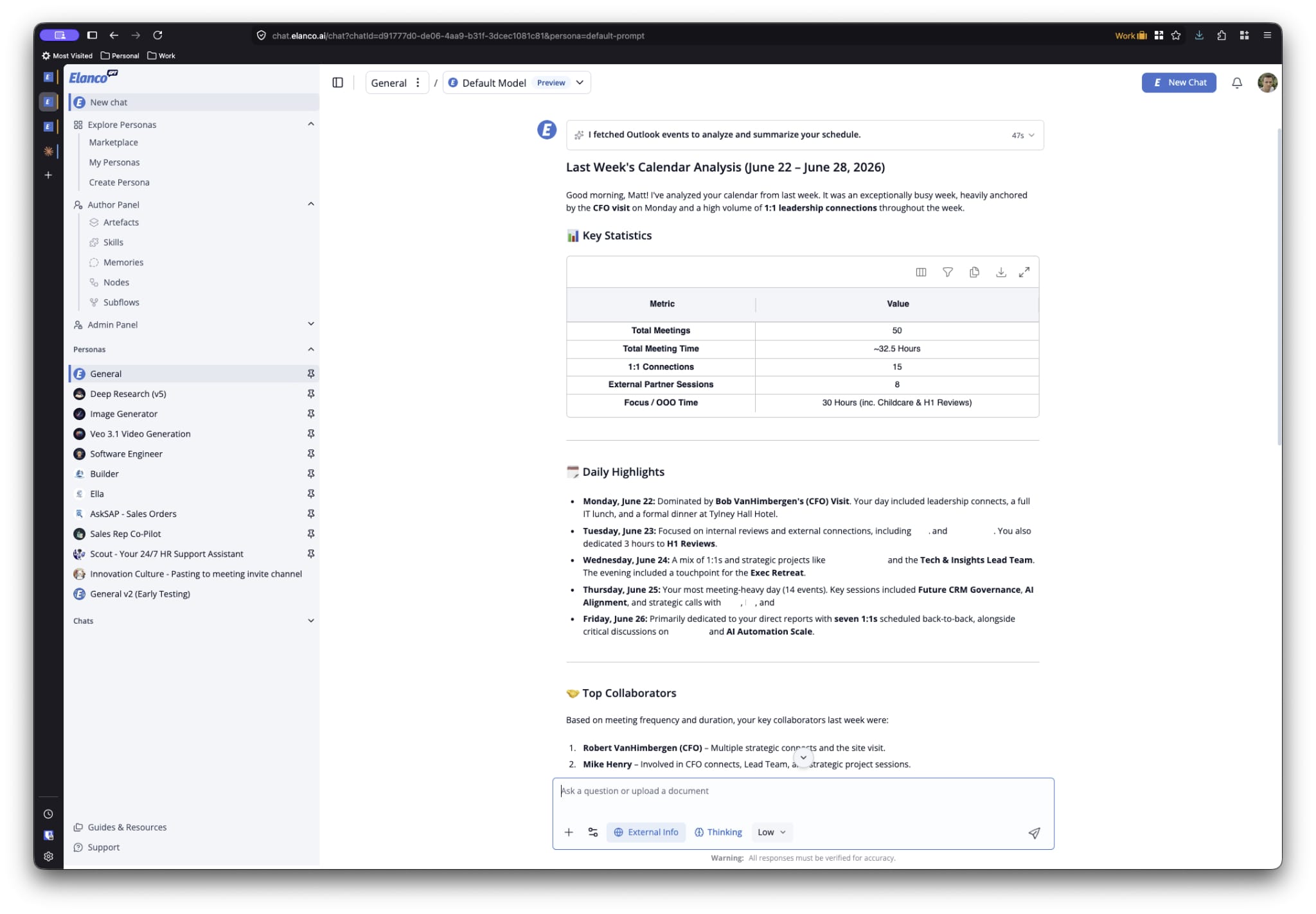
Skills can even trigger actions, for example, preparing emails, which are presented as a widget (with multiple options and the ability to open within Outlook, etc.)
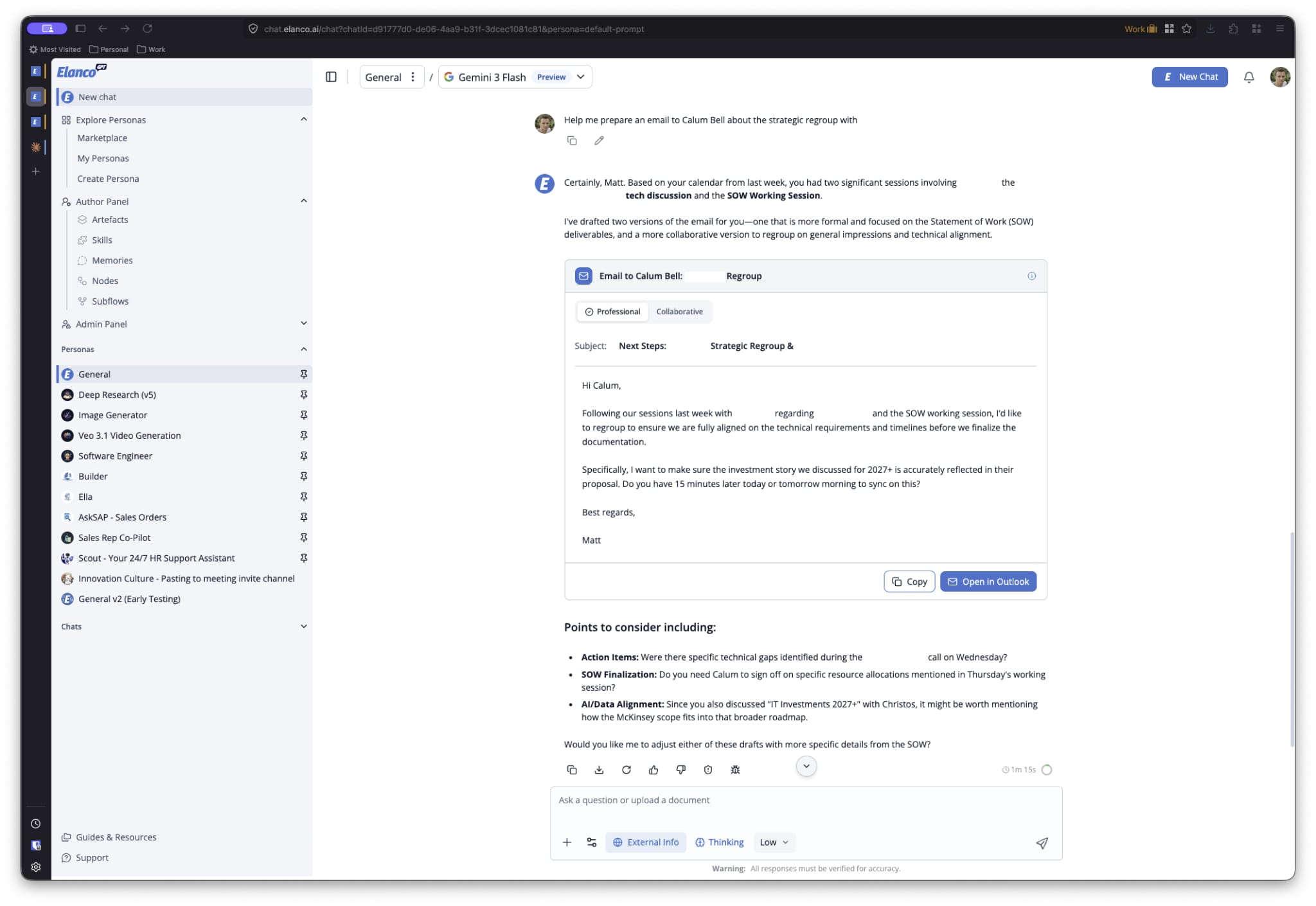
This is very powerful, as it allows the user to be productive within the chat interface (avoiding context switching and the need to wrangle multiple applications).
Conclusion
We expect Artefacts and Widgets to be extremely popular, allowing users to expand the way they interact and use AI.
It also supports the democratisation of software development, providing a secure, private and compliant way for users transform business processes through the use of technology, without the common bottleneck associated with IT resourcing.